7 Small Apartment Plant Ideas to Junglify Your Space (Without Clutter)

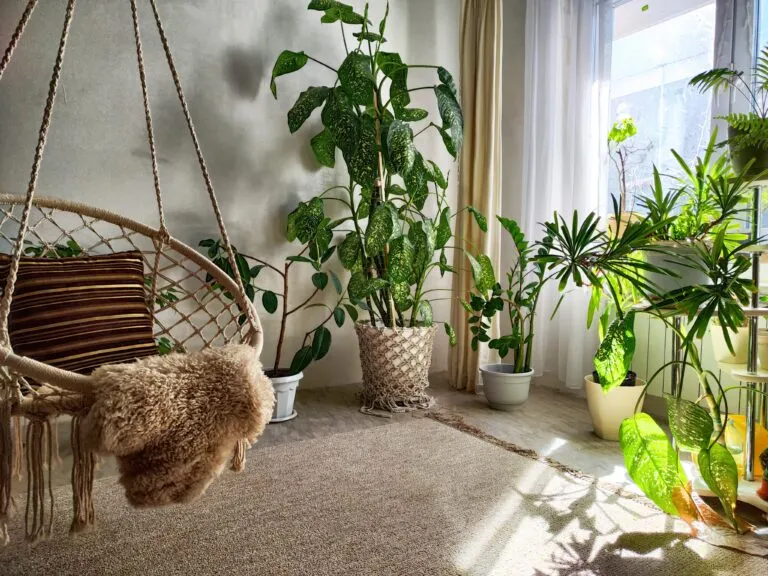
Small apartments can feel tricky when you start adding plants. It doesn’t take much before things feel crowded, pots end up scattered everywhere, and suddenly it’s more chaos than calm.
That’s where this idea of “junglifying” actually works. Instead of adding more plants, you’re placing them better. A few well-set-up zones will always look better than plants spread randomly around the room. You get that lush, green feel, but the space still works day to day.
These ideas are simple to copy, don’t need a big budget, and make the most of the space you’ve already got.
1. Build a Lush Corner Without Taking Over the Room
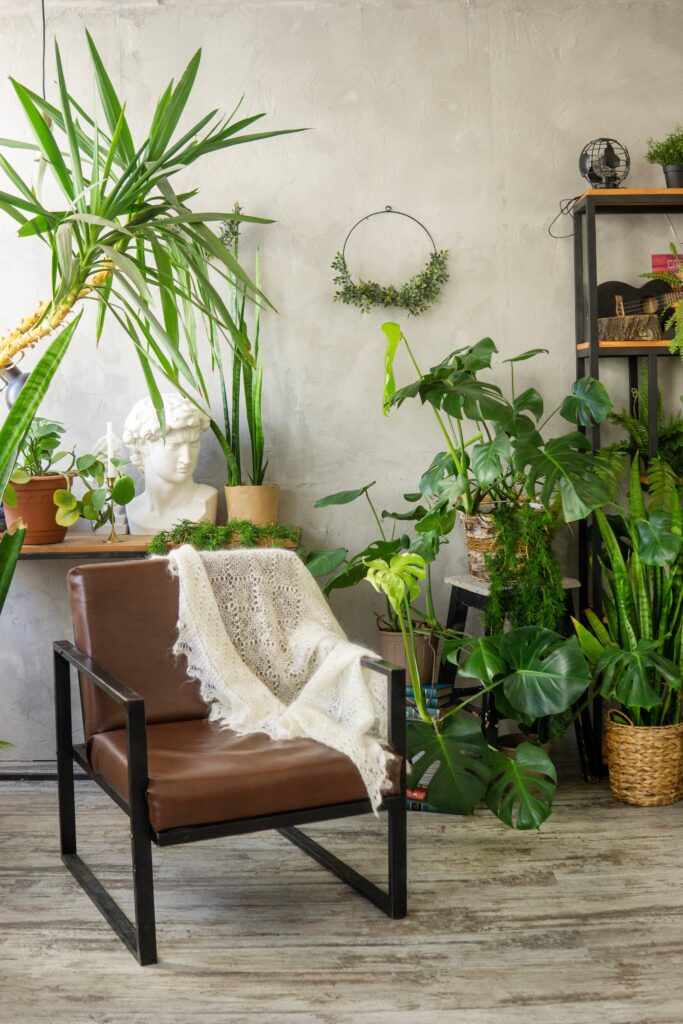
This setup works because everything is kept to one side instead of being spread across the whole space.
You’ve got a mix of taller plants, mid-height ones, and a few lower growers, all layered into that corner. The bigger leaves (like the monstera) draw your eye in, while the thinner plants and ferns soften it so it doesn’t feel heavy.
Nothing is perfectly lined up either. Some plants sit on stools or shelves, others are on the floor, and a few tuck in behind. That layering is what gives it that relaxed, slightly wild feel without looking messy.
The rest of the room stays clear, just a chair and open floor, which is why it still feels spacious even with quite a few plants in one spot.
If you were copying this in a small apartment:
- pick one corner and build it up gradually
- mix heights instead of keeping everything at the same level
- use one or two larger plants, then fill around them
It ends up feeling full and green, but still easy to live in.
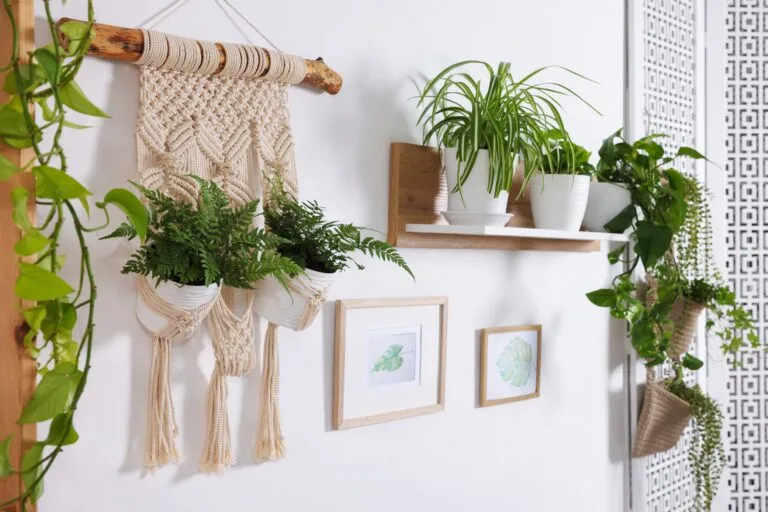
2. Create a Plant-Filled Table
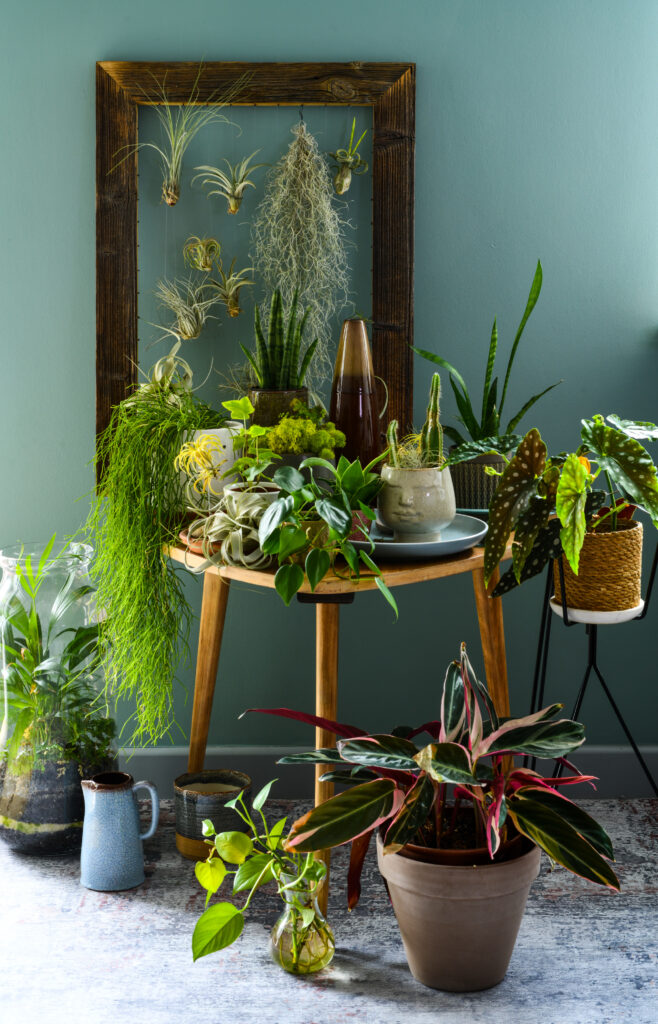
Instead of filling the whole room, everything is centred around one small table.
You’ve got a mix of plant types here – trailing, upright, and a few smaller pieces – all grouped together so it feels full without taking over the space. The hanging air plants in the frame above pull your eye up, which makes the setup feel bigger than it actually is.
There’s a bit of layering going on too. Some plants sit on the table, a few drop down over the edge, and others are placed just below or beside it. That keeps things interesting without needing more furniture.
The key here is keeping it contained:
- one surface becomes the “plant zone”
- everything else stays mostly clear
- a few plants can spill slightly outside that area
It ends up looking lush and styled, but still practical in a smaller space.
3. Build Height Around Your Seating Area
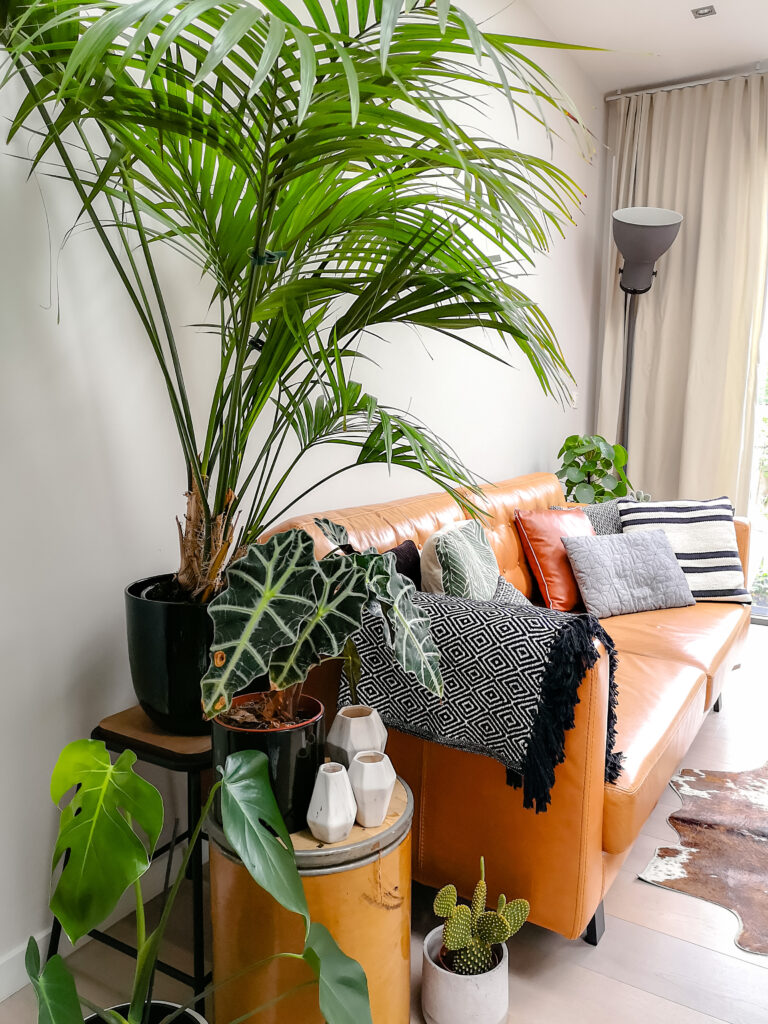
Instead of spreading plants across the whole room, everything is tucked into one side of the couch.
The tall palm sets the structure straight away. It draws your eye up and makes the space feel bigger, not smaller. Then you’ve got mid-height plants layered underneath, and a couple of smaller ones down low to finish it off.
Nothing feels random, it’s all stacked:
- tall at the back
- medium around the armrest
- smaller near the floor
That’s what gives it that full, jungle feel without clutter. The mix of leaf shapes helps too. Big, bold leaves (like monstera or alocasia) next to finer ones (like the palm) keeps it from looking flat.
This setup works especially well in small apartments because you’re using vertical space instead of floor space. You still have a clear room… just one really lush corner.
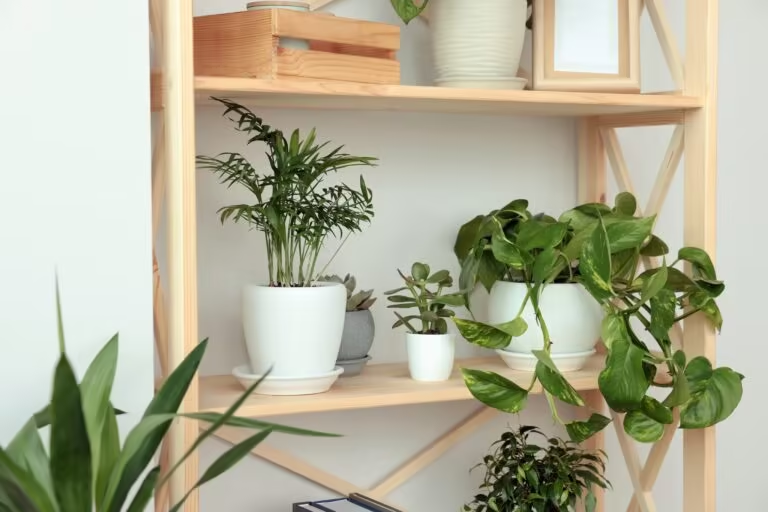
4. Stack Crates for an Instant Plant Wall

Instead of spreading plants across tables and floors, everything is built upward using simple wooden crates.
Each crate acts like its own little pocket of green. You can tuck smaller plants inside, sit bigger ones on top, and let a few spill over the edges. It keeps things contained, but still feels full.
What works really well here is the mix:
- bright pothos for that fresh pop of green
- darker leafy plants for contrast
- a spider plant up top to soften the edges
The crates also break it up visually. You’re not looking at one big mass of plants. You’ve got layers and little sections, which makes it easier on the eye in a small space.
You could sit this in a corner, next to a couch, or even use it as a mini plant “feature wall” in an apartment without taking up much room.
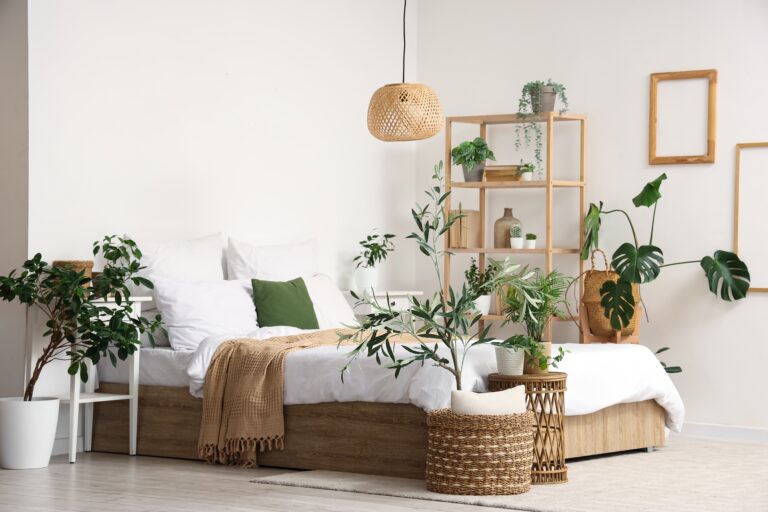
5. Soften a Bedroom With Light, Layered Plants

Instead of filling the space with lots of pots, the plants are spaced out and paired with soft textures. You’ve got one fuller plant near the bed, a taller one off to the side, and greenery draped up above. It’s not crowded, but it still feels alive.
The canopy and light fabrics do a lot of the work here. They soften everything, and the plants just sit into that instead of competing with it.
What makes this work in a small space:
- plants are spread, not packed
- different heights keep it interesting
- nothing blocks movement or light
Even just one or two well-placed plants like this can change the whole feel of a bedroom without turning it into a jungle explosion.
6. Turn Your Living Room Into a Green Backdrop

Instead of placing plants around the room, they’re grouped behind the couch to create a full backdrop.
It almost works like a living wall, but without needing to install anything. Big leafy plants sit at the back, with a few different shapes layered through so it doesn’t look flat.
What makes this work:
- larger plants are grouped together, not scattered
- they sit along one wall, so the rest of the room stays open
- the couch acts as a clean boundary
The light helps a lot here too. Everything is pulled toward the window, so the plants actually thrive instead of just sitting there looking nice.
This setup is great if you want that jungle feel but still need a functional living space. You’re basically turning one side of the room into a feature instead of filling every corner.
7. Junglify Your Window With Plants
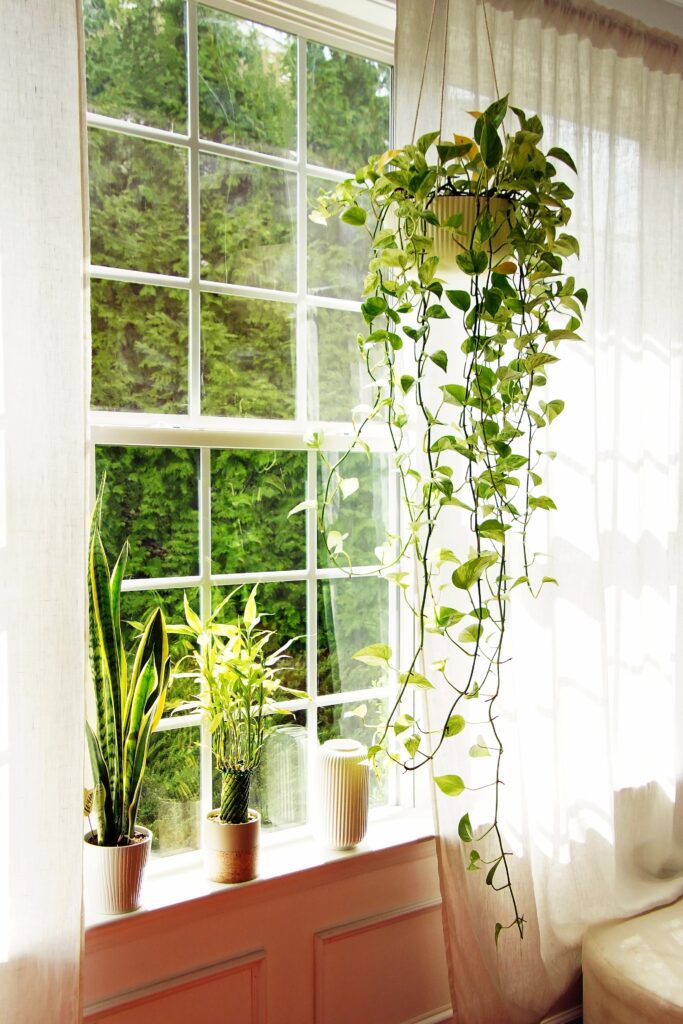
This is the kind of setup that just makes sense in a small apartment. Everything is built around the window where the light already is, so the plants actually grow well instead of just surviving in random corners.
You’ve got three layers happening here:
- a trailing plant hanging down (that pothos look)
- a couple of upright plants sitting on the sill
- soft light coming through behind everything
That’s what gives it that lush feel without needing a lot of space or furniture. The curtain helps too. It softens the light and lets the greenery stand out without feeling harsh or cluttered.
If you wanted to copy this:
- hang one trailing plant slightly off to the side
- add 2–3 small pots on the sill
- keep it light and simple, don’t overcrowd it
It ends up looking full, but still calm, which is exactly what you want in a small space.
That Jungle Feeling
You don’t need a huge space to get that indoor jungle look. Most of it comes down to how you group things and where you place them.
Pick one idea that suits your space and start there. Build it up slowly, move things around, and see what feels right. Plants are pretty forgiving, and half the fun is figuring out what works in your own place.
Once you’ve got one good setup, the rest tends to fall into place.